Evaluation
CLIENT / PARTNER
People Demand Change / International Rescue Committee – USAID-funded Programme
COUNTRY / REGION
Northern Syria
Project Period
Nov – Dec 2020
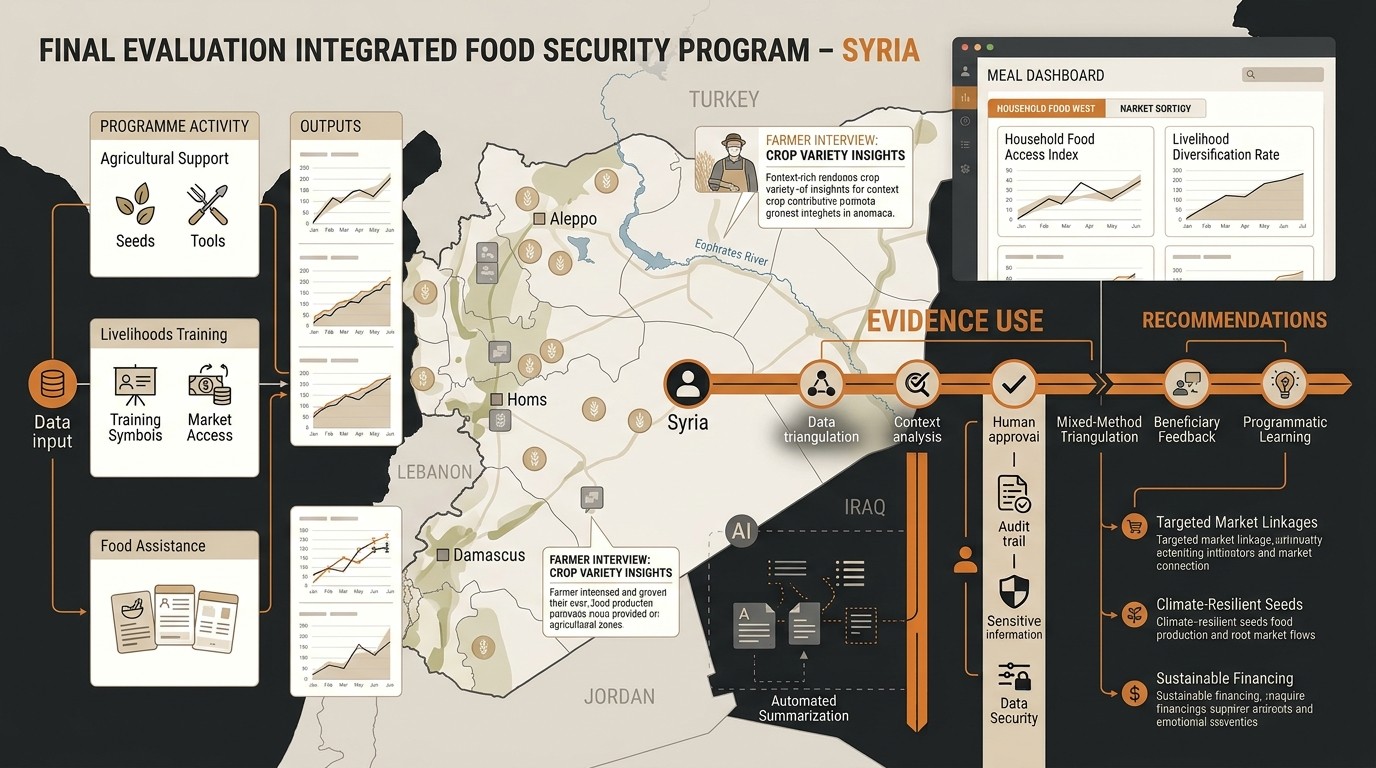
The programme combined interventions responding to very different dimensions of food insecurity. Immediate needs were addressed through modalities such as cash-based food assistance and emergency ready-to-eat rations, while other activities sought to strengthen household livelihoods and economic recovery through market support, cash for work, livestock assistance, vocational training and small-business grants.
A credible final evaluation therefore needed to look across the programme rather than assess individual activities in isolation. It had to examine how different intervention modalities contributed to programme outcomes, compare the situation at final evaluation with evidence generated earlier in implementation, and identify lessons that could inform future food security and livelihoods programming in a highly complex operating environment.
The evaluation used a mixed-methods approach and built on evidence from the programme's previous midterm assessment. This created a comparative basis for analysing programme performance and examining change over time rather than relying solely on a final snapshot.
The evaluation covered food assistance through cash transfers, emergency ready-to-eat rations, market-strengthening activities, cash for work, cash for livestock, cash for food, vocational training and small-business grants. Evidence across these intervention types was synthesised to examine overall outcomes, identify lessons learned and develop practical recommendations for future programming.
The final evaluation provided IRC with a consolidated assessment of a diverse food security and livelihoods portfolio and a comparative perspective based on evidence from earlier in the programme cycle. It translated findings across emergency assistance, market interventions and livelihood support into lessons and recommendations for future programming.
The assignment demonstrates the value of combining quantitative and qualitative evidence with earlier evaluation data to move beyond simple endline measurement and generate learning that can inform subsequent programme design and adaptation.