Third Party Monitoring
CLIENT / PARTNER
People Demand Change / IBTCI - USAID-funded METAL Programme
COUNTRY / REGION
Libya
Project Period
2017–2023
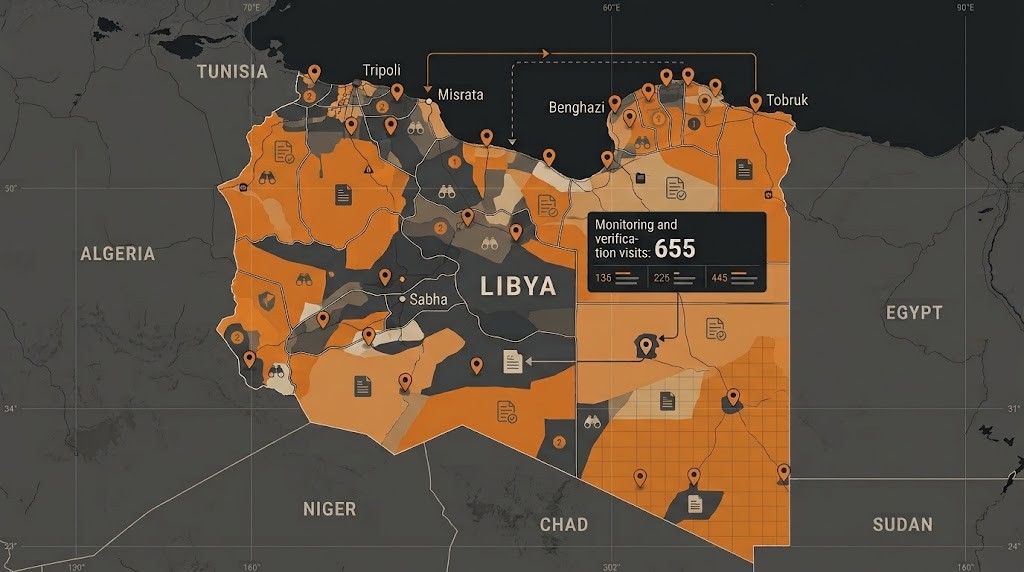
Development programmes operating across Libya required reliable, independent evidence on whether activities were being implemented as planned and whether intended support, equipment, and services were reaching programme locations. The operating environment, geographic dispersion, and complexity of implementation created a need for structured third-party monitoring capable of generating consistent and timely information for programme managers.
While working with People Demand Change, the assignment involved managing third-party monitoring activities under the USAID-funded METAL programme in collaboration with IBTCI. Monitoring teams conducted 655 site visits across Libya using structured verification methods and the Souktel application for digital data collection.
The monitoring process included observation of programme activities, verification of equipment and implementation progress, collection of supporting evidence, quality assurance of field data, and preparation of monitoring reports submitted to IBTCI. Particular attention was given to consistency of data collection, documentation of implementation issues, and ensuring that findings could be used by programme teams for follow-up and management decisions.
The assignment generated an independent evidence base covering hundreds of programme locations and activities across Libya. Regular monitoring and verification improved visibility over implementation progress and provided programme teams with structured information on activities, equipment, emerging issues, and areas requiring follow-up.
The combination of field verification, digital data collection, quality assurance, and systematic reporting supported evidence-based decision-making and adaptive programme management in a complex operating environment. The experience also demonstrated the value of structured third-party monitoring systems for maintaining oversight across geographically dispersed programmes.